
A bean bag creates a relaxed place to read, watch a show or take a break, but it can be harder to reach a drink or phone when there is nowhere nearby to set it down. The right side table makes the lounge area more useful without making it feel crowded.
Because a bean bag changes shape as someone settles into it, choosing a table is a little different from choosing one for a firm sofa. Think about reach, stability, surface space and the way people move through the room before you buy.
1. Check the table height from the seat
Start by sitting in the bean bag the way you normally would. Notice where your hand naturally rests when you reach for a cup or phone. A useful side table should put the surface within easy reach without making you lean forward or stretch sideways.
Bean bags can sit lower or higher depending on how the filling settles and how the person is sitting. That is why testing the reach from the actual seat is more helpful than choosing a table by its height alone. A compact C-shaped table can work well when its base can slide beside the seat, while a small pedestal table may suit a more open corner.
2. Choose a stable base
A table that wobbles every time someone picks up a drink quickly becomes frustrating. Look for a sturdy base and legs that sit evenly on the floor. If the table is lightweight, check whether it shifts easily when nudged.
In a home with children or pets, avoid narrow, unstable designs that can tip when bumped. Rounded corners can also be a practical choice in a busy family room.
3. Make sure the surface is large enough
Think about what you actually keep beside the seat. If it is usually a phone, remote and one drink, a small round table may be enough. If you also read, draw or use a tablet, choose a wider surface that can hold a book or a small tray without feeling overloaded.
A raised edge or removable tray can help keep small items together. Use a coaster for drinks and keep liquids away from electronics, charging cables and soft upholstery.
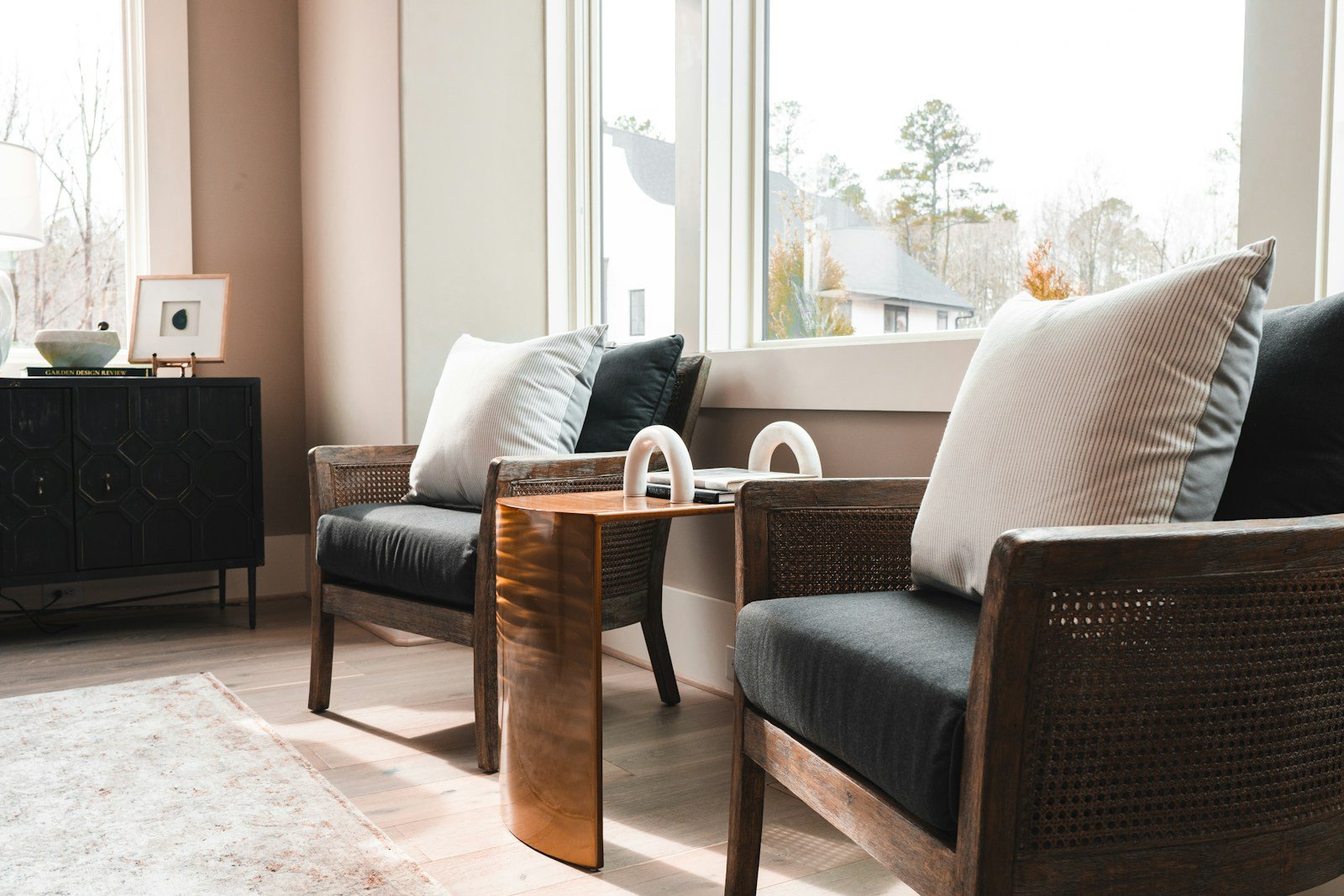
Photo by Tyrone Sanders on Unsplash.
4. Pick a material that suits the room
Wood adds warmth and works well with natural, relaxed décor. Metal can create a lighter visual profile and often pairs easily with modern furniture. Glass can make a small room feel visually open, but it may need more frequent cleaning and may not be the best fit for every home with young children or active pets.
Choose a finish that relates to something already in the room, such as a floor tone, lamp base, shelving or cabinet hardware. The table does not need to match every piece of furniture; a complementary finish is usually enough.
5. Consider storage, not just looks
A lower shelf, drawer or nearby basket gives remotes, books, charging cables and small accessories a regular home. Keeping those items off the floor makes the lounge area easier to tidy and reduces the chance of someone stepping on them.
If the table has no storage, place a small basket beside the seat instead. Keep cables gathered and routed away from the main walking path.
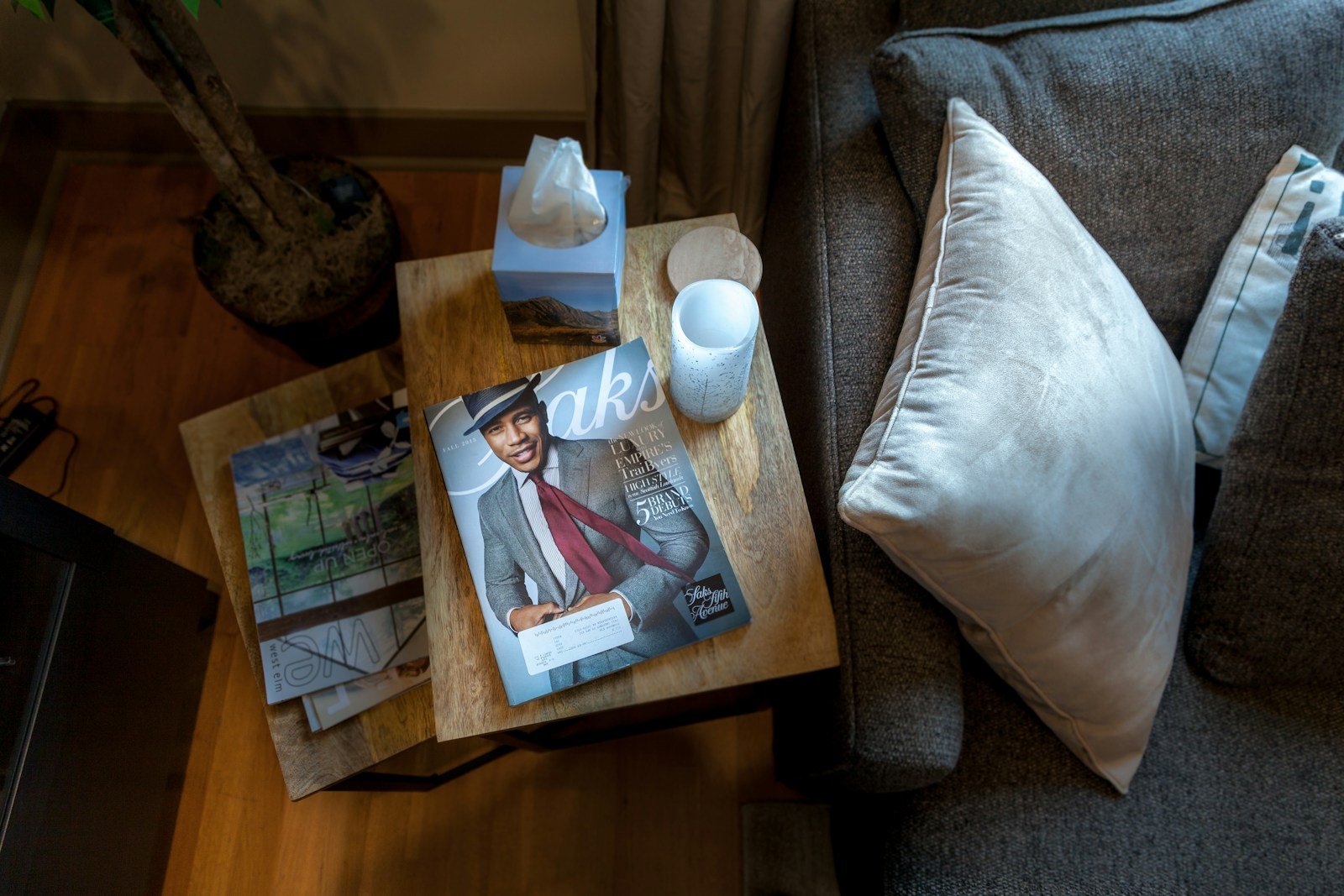
Photo by James Lewis on Unsplash.
6. Place the table where people can move safely
Keep the table close enough to reach but not so close that it blocks the way in or out of the seat. Leave a clear route to doors and other furniture, and avoid placing sharp corners where people naturally walk past.
If the lounge area sits on a rug, check that the table stands level and does not rock on the rug edge. For a family space shared with pets, these pet-friendly rug tips for a family living room can help you think through cleaning and everyday traffic around the seating area.
7. Try the setup before deciding it is finished
Put the table in place and spend a few minutes using the seat. Reach for a cup, set down a book, pick up the remote and stand up again. If you have to twist or stretch, move the table a little closer or try a different shape.
For a bean bag lounge area, the best table is not necessarily the biggest or most decorative one. It is the one that feels easy to use, stays steady and leaves enough room for the seat to be enjoyed.
A simple side-table checklist
- Test the height and reach from the bean bag itself.
- Choose a stable base that sits evenly on the floor.
- Allow enough surface space for the items you use every day.
- Pick a material and finish that suit your room and household.
- Use storage or a basket to keep small items organized.
- Keep walkways clear and avoid unstable placement on rug edges.
Final thoughts
A thoughtfully chosen side table turns a casual bean bag corner into a practical everyday spot. Focus on comfortable reach, a steady base and enough room to move, then choose a finish that feels at home with the rest of your décor.
Featured photo by Parker Coffman on Unsplash.

