
A good homework routine needs more than a desk and a stack of school supplies. Children also benefit from a home environment that makes it easier to focus, take short breaks, and return to their work feeling refreshed. A thoughtfully arranged study area can include both a practical desk and a comfortable place to read or pause.
An oversized bean bag can be useful as a separate reading and break seat—not as a replacement for a properly sized desk and supportive chair during writing or computer work. Here are simple ways to bring both zones together.
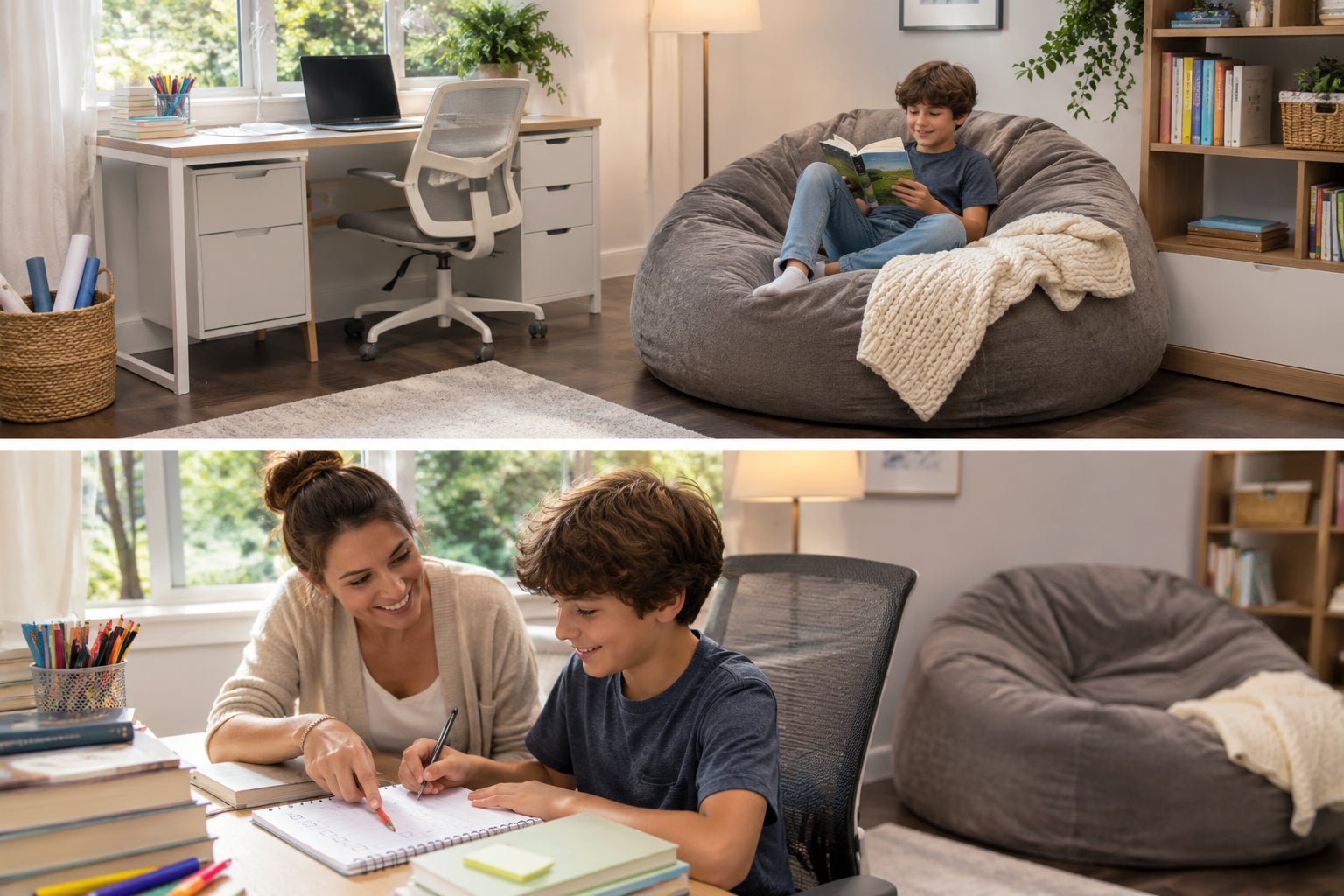
1. Give focused work its own desk
Start with a stable desk and a chair that lets your child sit with feet supported and the work surface at a comfortable height. Keep pencils, notebooks, chargers, and frequently used supplies within easy reach. Good task lighting and a screen positioned comfortably can also make the area easier to use.
Keep the desk as uncluttered as possible. A small organizer or a few labeled containers can prevent supplies from spreading across the room.
2. Create a separate place for reading and short breaks
Once the work zone is set, add a softer spot nearby for independent reading, listening to an audiobook, or taking a short break between assignments. An oversized bean bag can make this corner feel inviting without turning the desk into a lounge area.
Place the bean bag where there is enough room to get on and off safely. Keep it away from doorways, drawers, and busy walkways. A small book basket and a reading light can make the spot feel complete.
3. Keep the two zones visually connected
The desk and bean bag do not need to match exactly. Choose a simple color palette and repeat one or two details, such as a soft rug, a fabric storage basket, or a cushion color. This makes the study and reading areas feel like parts of the same room.
Natural light is helpful where available. Position screens to reduce glare, and add a lamp for darker afternoons.
4. Make breaks short, comfortable, and intentional
A bean bag can be a comfortable place to step away from a worksheet, read a few pages, or relax briefly. Try a simple rhythm: finish one manageable task, take a short movement or reading break, then return to the desk.
Encourage children to stand, stretch, and move around too. A change of seat should complement healthy movement rather than replace it.
5. Use storage that children can manage
Choose open bins, shelves, or baskets that make it easy to put things away. Keep school materials close to the desk and books near the reading spot. A dedicated basket for library books can help prevent them from getting mixed up with homework papers.
At the end of a study session, invite your child to return supplies to their places. A quick reset makes the next session easier to begin.
6. Keep the bean bag and study area tidy
Use a washable throw only if it is suitable for the bean bag’s fabric and care instructions. Brush or clean the cover according to its label, and avoid using cleaning products without checking that they are appropriate for the material. Keep food and open drinks at the desk or on a stable side table rather than on the bean bag.
7. Let your child help personalize the space
A favorite book display, a small pinboard, or a piece of artwork can make the area feel welcoming. Let your child choose a few details while keeping the overall setup calm and easy to maintain.
A balanced space for learning and recharging
A homework-friendly room does not need expensive furniture or a complete makeover. A practical desk for focused tasks, an inviting bean bag corner for reading and short breaks, and simple storage can create a flexible space that supports everyday routines.
Keep the work area supportive, make breaks purposeful, and let comfort have its own place in the room.
Photo credits: Original lifestyle imagery created for FluffySack.

